Table Of Content
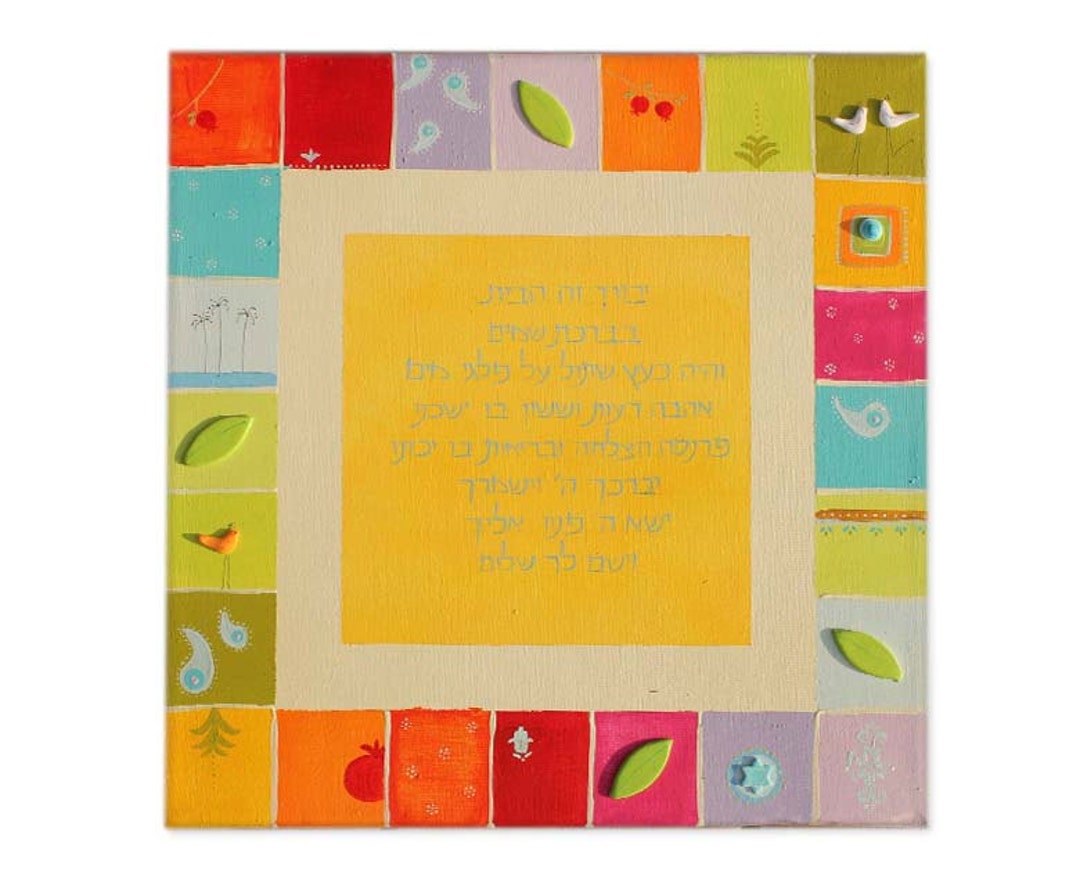
Chuck Meyer of Ewing, N.J., writes to ask why a Jewish house of worship is known as a synagogue. Through the centuries, different groups took leadership roles in the synagogue. The earliest and most consistent leaders were the wealthy benefactors (like Theodotos) who helped build and maintain the synagogues. Kohanim (priests) apparently served some functions in the synagogue. The early targum (Aramaic translations of the Torah reading) and piyyut (liturgical poetry) were apparently performed in the ancient synagogue by professional meturgemanim (translators) and payetanim (poets).
Arrests in Wisconsin follow Columbia raid
Thus, sanctuary seating plans in the Western world generally face east, while those east of Israel face west. Occasionally synagogues face other directions for structural reasons; in such cases, some individuals might turn to face Jerusalem when standing for prayers, but the congregation as a whole does not. Historically, synagogues were built in the prevailing architectural style of their time and place. Thus, the synagogue in Kaifeng, China, looked very like Chinese temples of that region and era, with its outer wall and open garden in which several buildings were arranged. The styles of the earliest synagogues resembled the temples of other cults of the Eastern Roman Empire. The surviving synagogues of medieval Spain are embellished with mudéjar plasterwork.
Rabbis and the Synagogue
This idea is favored by task force member Michael Landau, an architect who has worked on over 75 U.S. synagogues and is known for his creative reuse of historic sacred materials. Landau takes windows, Torah arks, eternal lights and other treasured ritual objects that hold synagogues’ histories and incorporates them into new contemporary design schemes. Chicago Loop Synagogue was initiated by a gift from the Midwest Branch of The United Synagogue of America (today the United Synagogue of Conservative Judaism). The goal was to serve commuters seeking kosher food and a place to pray during the workday. Perched above the synagogue’s front door, a two-ton sculpture extends over the sidewalk. Created by Henri Azaz in 1963, the work consists of bold letters tumbling over each other spelling the priestly benediction.
Other famous synagogues
This is largely because Jewish law prohibits carrying money on holidays and Shabbat. Tzedakah (charitable donation) is routinely collected at weekday morning services, usually through a centrally-located pushke, but this money is usually given to charity, and not used for synagogue expenses. It is important to note, however, that you do not have to be a member of a synagogue in order to worship there. A typical synagogue contains an ark (where the scrolls of the Law are kept), an “eternal light” burning before the ark, two candelabra, pews, and a raised platform (bimah), from which scriptural passages are read and from which, often, services are conducted. The segregation of men and women, a practice that is still observed in Orthodox synagogues, has been abandoned by Reform and Conservative congregations.
The Dome of the Rock is the gold-domed building that figures prominently in most pictures of Jerusalem. Non-Jews are always welcome to attend services in a synagogue, so long as they behave as proper guests. Proselytizing and "witnessing" to the congregation are not proper guest behavior. But we always welcome non-Jews who come to synagogue out of genuine curiosity, interest in the service or simply to join a friend in celebration of a Jewish event. If you are interested in finding an Orthodox synagogue or minyan (prayer group) in your area, check out Go Daven, a searchable worldwide database of Orthodox minyans.
What I Learned From My Synagogue’s Active-Shooter Drill - The Atlantic
What I Learned From My Synagogue’s Active-Shooter Drill.
Posted: Wed, 01 Mar 2023 08:00:00 GMT [source]
They call their houses of prayer "temples," believing that such houses of worship are the only temples we need, the only temples we will ever have, and are equivalent to the Temple in Jerusalem. This idea is very offensive to some traditional Jews, which is why you should be very careful when using the word Temple to describe a Jewish place of worship. Synagogues do not pass around collection plates during services, as many churches do.
The study house or bet midrash was the primary rabbinic institution of higher learning. In early rabbinic literature, the bet midrash seems to refer to circle of disciples and not a permanent institution; when a sage died, his school ceased and his students studied elsewhere or began their own schools. When we speak of The Temple, we speak of the place in Jerusalem that was the center of Jewish worship from the time of Solomon to its destruction by the Romans in 70 C.E. This was the one and only place where sacrifices and certain other religious rituals were performed. It was partially destroyed at the time of the Babylonian Exile and rebuilt. The famous "Wailing Wall" (known to Jews as the Western Wall or in Hebrew, the Kotel) is the remains of the western retaining wall of the hill that the Temple was built on.
Oldest synagogue worshipers to stay - The Columbian
Oldest synagogue worshipers to stay.
Posted: Sat, 03 Sep 2022 07:00:00 GMT [source]
Contained within the ark, the Torah scrolls are enshrined in the place of greatest honor within the sanctuary. A Torah scroll contains the Hebrew text of the first five books of the Bible (Genesis, Exodus, Leviticus, Numbers, and Deuteronomy). Similar to the ark mentioned above, the scroll itself is often decorated with Jewish symbols. A cloth mantle covers the scroll and draped over the mantle there may be a silver or decorative breastplate with silver crowns over the scroll posts (although in many congregations the breastplate and crowns are not regularly used, or used at all). Draped over the breastplate will be a pointer (called a yad, the Hebrew word for “hand”) used by the reader to follow his/her place in the scroll. During services, non-Jews can follow along with the English, which is normally printed side-by-side with the Hebrew in the prayerbook.

The Simon Wiesenthal Center
House Speaker Mike Johnson called for Columbia University President Minouche Shafik to resign during his visit to the school Wednesday. In his remarks, Johnson shamed students and faculty involved in the protests, as well as administrators for not doing enough to prevent them. In Los Angeles, the University of Southern California closed off its campus Wednesday after police clashed with protesters trying to set up an encampment at the school's Alumni Park. There have been confrontations with law enforcement and more than 1,300 arrests. In rare instances, university officials and protest leaders struck agreements to restrict the disruption to campus life and upcoming commencement ceremonies.
Exhortations like these, however, should be seen against the backdrop of rabbinic indifference or hostility to the synagogue. Although the origins of both the synagogue and the study house predate the destruction of the Temple in 70 C.E., it is only after the Temple’s destruction that these two entities became the central and defining institutions of ancient Judaism. Eventually, the rabbis saw these institutions as replacing the Temple as a location of access to the Divine. In Orthodox synagogues, you will also find a separate section where the women sit. This may be on an upper floor balcony, or in the back of the room, or on the side of the room, separated from the men's section by a wall or curtain called a mechitzah. Men are not permitted to pray in the presence of women, because they are supposed to have their minds on their prayers, not on pretty girls.
Even though remembering the Temple remains a central part of Jewish practice today, it can be difficult to grasp just how central the Temple was to ancient Jewish life. Here are 12 facts that help illustrate what the ancient Temple was really like, and what it has meant to Jews throughout history. Long ago, as prescribed by the Hebrew scriptures, Jewish worship revolved around the Temple in Jerusalem. For a thousand years, the Temple was a hub for offering sacrifices of all sorts (peace offerings, thanksgiving offerings, atonement offerings and more) every day of the year.


No comments:
Post a Comment